
The majority of day to day work on the railway covers the ongoing construction of the rail. This could include maintenance work, the construction of new rail networks or construction repairs. The rail industry is always moving and work is always needed to ensure the entire network is safe and reliable.
Rail construction workers do a lot across the rail network and their contribution is vital. Every day is different and growth is guaranteed in this position. But do you think that rail construction is for you? Have you heard about it before? If not, then now is the time to discover more of the ins and the outs of this role and see if this area of the rail industry suits your aspirations.
In this post, we’ll introduce you to the vital role that rail construction plays in the rail industry, we’ll explain more about the role specifics and we’ll also cover the training opportunities that are available for this career avenue.
We’ll cover:
Rail Construction: What is it?
Rail construction is vital across the entire rail network. If problems occur or obstacles occur on the network this could put the passengers and the rail crew at risk of serious danger. Also, delays are more likely to happen and occur. Not only will this slow down travel services but it can be detrimental to the future of the rail industry. Rail construction workers are essential across the rail industry, their job roles are sought after and they’re admired in the industry for their hard work, dedication and reliability.
Rail construction includes laying, re-laying, repairing and examining railway track lines. This also covers track maintenance and track line reporting. Rail construction workers should have safety, quality and accuracy at the forefront of their minds at all times to ensure tracks are laid correctly and the network is reliable, safe and secure.
Is it the Right Area For You?
When choosing a career pathway it’s important to understand the ins and the outs of the role. Whether that’s understanding the roles and responsibilities or whether that’s knowing the transferable skills that can be useful in the role. No research will be wasted and everything you learn and understand about the role will ensure that you’re making the right decision for your goals and your future.
What Does The Job Entail?
This job offers flexibility, variety and good career prospects. As a rail construction worker, you’ll play a key role in ensuring the whole rail network is working efficiently and safely. Each day will be different and no two challenges are the same. As the rail network expands and grows, so does the demand for different types of maintenance and construction work.
On average, once training is complete and you’ve landed yourself a job, you could be looking at working a 37 hour week. Which could include weekends and bank holidays and even overtime. Although this may sound a lot, there’s opportunities all over the UK so you’ll be sure to find one that suits you and your commitments perfectly.
Daily responsibilities as a construction worker in the rail industry can vary from role to role.
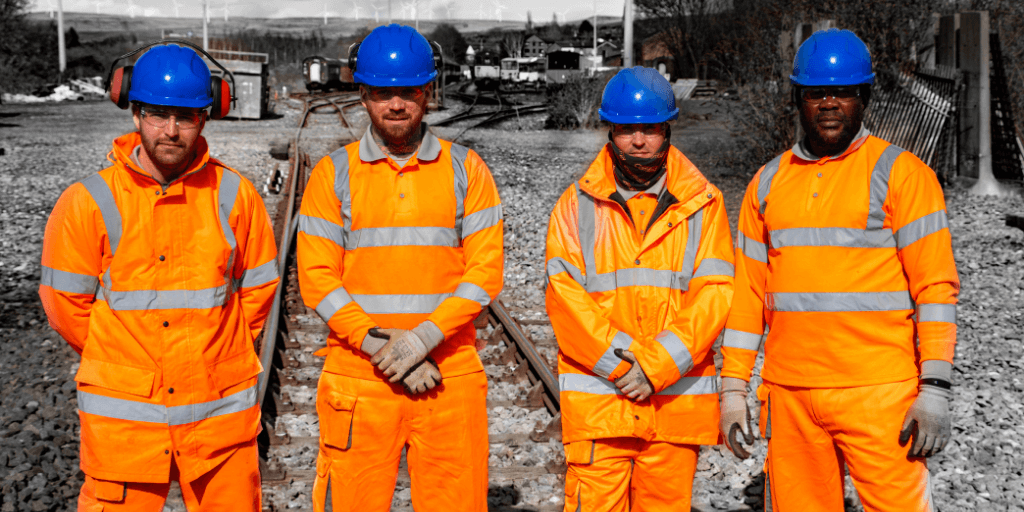
You will be expected to work in all weather conditions and this role can sometimes be physically demanding so if you enjoy practical roles – this’ll certainly be beneficial and will suit you perfectly. You’ll also be given the correct clothing to wear and you’ll always be safe even if you do carry out work on the tracks.
However, as a rough guide, you could be looking at something similar to this:
- Visually inspects rails and tracks, bolts, fishplates and chairs for distortion or fracture.
- Check the tightness of bolts and replace damaged rail chairs and repack ballast under sleepers if necessary.
- Report accidents and incidents.
- Lubricate points, examine fences, drains, culverts and embankments and carry out any necessary maintenance.
- Fastens together sections of rail by bolting fishplates to rails.
- Install and renew track, tunnels, embankments, cuttings, level crossings and bridges.
- Check sections of track are the correct distance apart and the right height.
- Survey sections of track to identify maintenance needs.
Career progression is possible in this role if further training is taken or further experience is gained. As you work and learn at the same time, more opportunities to grow and develop will become available. You could become a team leader in the construction rail department or with further specialised training you could become a track inspector, engineering technician, track designer or construction manager.
Key Skills
With every role in the rail industry, transferable skills are always recognised and honoured if a candidate has them. Transferable skills work in everyone’s favour, they can stand you in good stead for a promising career but they’re also great for any recruiter looking for skilled workers.
If you already have some of the following skills that’s great. If you don’t, there’s no need to worry. The rail industry welcomes keen learners from all backgrounds. As long as you’re over the age of 19 and you’re dedicated to improving the rail industry – you’ll be in the right role. It’s never too late to reskill in a career you might enjoy!
- Knowledge of building and construction,
- The ability to use, repair and maintain machines and tools.
- Physical skills like movement, coordination, speed with accuracy and grace.
- The ability to work well with others.
- To be thorough and pay attention to detail.
- Be flexible and open to change.
- Leadership skills.
- Observation and recording skills.
- To be able to carry out basic tasks on a computer or hand-held device.
If you’re a natural leader, you enjoy working in a team environment and you thrive off helping others create meaningful work that has a positive impact – this area of the rail industry could be for you. Rail construction workers should thrive off challenges, they should have an eye for detail and they need to be willing to work different hours until a job is complete to the highest standard. Time is precious but the safety of passengers and the crew is paramount.
Training Opportunities
As we’ve already covered, transferable skills are always admired and welcomed. On the other hand, to succeed in this role and to progress in this area of the industry, expert training is required. On-the-job training is a great choice so you can get a feel for the role you’ll be doing in the long run and you’ll also gain a qualification at the end of it.
At Rail Futures, we position keen learners on training courses across the UK for jobs within the rail industry. We work with 15 colleges up and down the country so there’s always going to be an opportunity available for training. Whether you want to be based in the capital city of London or you want to stay closer to home – there’s something for everyone.
With over 90 years worth of combined experience, we know the rail construction role inside and out as well as the entire rail industry. We can help you find the right course, in the right place for the best future possible. All it requires is your dedication and self-belief.
Courses for rail construction work can be between six to twelve weeks and they can either be completed on a part-time or full-time basis depending on the training opportunity and the requirements for completion. If you have difficulty choosing which training opportunity is for you, our team is always on hand to help you choose so you needn’t worry about that either.
Find The Perfect Course That Suits Your Needs
It can be difficult to decide which course suits you and your career prospects but with an expert team it’s not that difficult. We can guide you through each stage, we have FREE open days available all over the UK and virtually (tune in from the comfort of your own home) and we’re always at the end of the phone to answer any questions. So if you’re keen to get on track for training, get in touch with us today!
Alternatively, you can download a FREE copy of our new Ebook that covers a Professional Rail Career Progression Plan. It includes an overview of the rail industry, how to choose the right training course, finding a job in the industry and more. It’s a resource worth checking out if you’re passionate about kick-starting your career in the right direction.

